
DeadConflictTimeline
China–Taiwan Standoff
Updated 31 updatessince 90 outlets
The China-Taiwan standoff continues to escalate following U.S. political visits and military developments, with Taiwan enhancing its defense readiness amid increasing Chinese military activity.
Timeline
Now
Taiwan's defense ministry officially announced plans to conduct military exercises aimed at bolstering readiness in the face of rising tensions with China.
9 sources · Reuters, Washington Post
U.S. readiness erodes amid Iran war
New FactsWashington Post reported that the Pentagon's resources are severely stretched due to the war in Iran, diminishing American military readiness at a critical time as tensions with China rise.
6 sources · Washington Post, Reuters
Taiwan fires HIMARS into Taiwan Strait
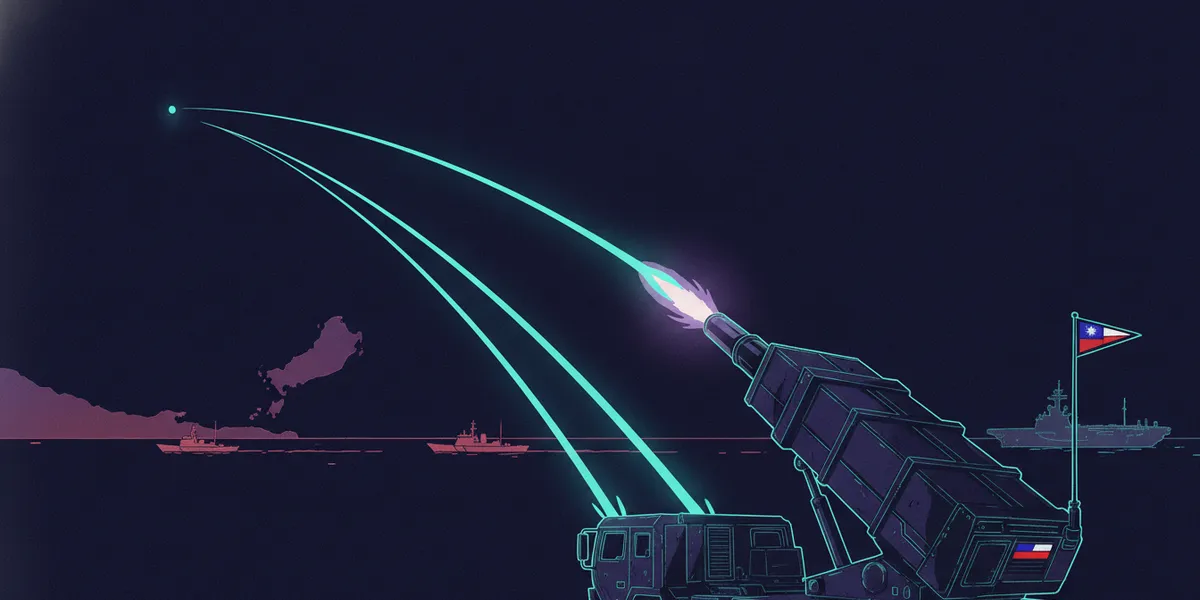
EscalationTaiwan's military successfully test-fired 36 HIMARS rockets into the Taiwan Strait on June 10, marking the first time these systems were used along the west coast.
4 sources · Reuters, NPR
Taiwan Expels Chinese Coast Guard Ships
EscalationTaiwan's coast guard successfully expelled four Chinese coast guard ships that were involved in a maritime operation east of Taiwan.
7 sources · Reuters, Bloomberg
Confidential intelligence report highlighted China's military advancements, confirming a significant strategic edge over the United States at a time of escalating tensions. This assessment emerged as President Trump prepared for his visit to Beijing, emphasizing the urgency for U.S.
6 sources · New York Times, Washington Post
Report highlighted the transit of a China-linked vessel as the first indication that some nations may be prepared to test and counter the United States' naval blockade strategy in the region.
6 sources · New York Times, Reuters
U.S. military personnel have been reported removing Joint Direct Attack Munitions from a B-1 bomber at RAF Fairford in southern England, suggesting preparations for potential military engagement involving Taiwan amid rising tensions with China
6 sources · New York Times, Reuters
Japan's defense minister announced the deployment of long-range missiles in a southwestern region near China, coinciding with rising tensions in the region.
7 sources · Newsweek, Arkansasonline
Brookings released a report indicating that China's military growth has significantly altered the balance of power across the Taiwan Strait, suggesting that Taiwan faces greater risks amid insufficient U.S. deterrence strategies.
4 sources · CNN, Time
People's Liberation Army Navy is on the verge of launching its first Type 09V guided missile nuclear submarine, according to a March 1, 2026 report from the Institute for the Study of War.
4 sources · ABC News (Australia), Airuniversity
Japan Hosts Missiles on Yonaguni Island
EscalationJapan's defense ministry unveiled plans to station surface-to-air missiles on Yonaguni island, which are capable of intercepting aircraft and ballistic missiles.
5 sources · The Guardian, CBS News
Taiwan executed live-fire drills today deploying HIMARS artillery systems amid rising tensions and heightened military activity observed from China's People's Liberation Army in the Taiwan Strait.
9 sources · NPR, Reuters
U.S. lawmakers emphasized to Taiwan's parliament that the threat from China is at an unprecedented level, urging increased defense spending.
5 sources · Reuters, DW
Taiwan's defense ministry announced on February 6, 2026, that it will seek an extension for signing an arms deal with the United States.
7 sources · Reuters, New York Times
Two U.S. naval vessels, a destroyer and a survey vessel, completed Washington's first reported transit of the Taiwan Strait for the year 2026.
10 sources · New York Times, Reuters
China rehearses blockade around Taiwan
EscalationPeople's Republic of China (PRC) conducted large-scale military exercises that simulated a blockade around Taiwan from December 29 to 30, showcasing its military readiness and capability to surround the island.
5 sources · Reuters, NPR
China conducted military drills in the waters surrounding Taiwan, framing them as a warning to what it termed 'separatist forces.
7 sources · Reuters, NPR
Japan Approves Record Defense Budget
EscalationJapan's cabinet approved a defense budget that exceeds previous records, aiming to bolster defense capabilities against threats from China.
3 sources · Reuters, DW
Japanese Prime Minister Sanae Takaichi stated that a Chinese attack on Taiwan could lead Japan to take military action.
9 sources · NPR, Reuters
Dr. Gaurav Dutta's analysis noted that the ongoing Japan-China tensions related to Taiwan are primarily verbal and economic, providing insight into Japan's strategic position that military intervention is not currently anticipated
7 sources · BBC, NPR
Prime Minister Sanae Takaichi asserted in a parliamentary session on November 7 that Japan might respond with military force if China attacks Taiwan.
6 sources · Reuters, New York Times
Taiwan commits $40B to defense
EscalationTaiwan's government plans to introduce a $40 billion supplementary defense budget, emphasizing its determination to strengthen defenses against China's military actions.
5 sources · Washington Post, Bloomberg
Japanese Prime Minister Sanae Takaichi stated that Japan might take military action if China were to attack Taiwan.
5 sources · Reuters, ABC News (Australia)
Taiwan's defense ministry released a report on October 9, 2025, indicating that China is increasing its military operations near Taiwan and improving its readiness for a possible surprise attack.
8 sources · Reuters, CBS News
Three Taiwan Strait Crises Revisited
New FactsAnalysis detailed in Proceedings discusses the three major Taiwan Strait Crises that have shaped the strategic landscape since the founding of the People's Republic of China and Chiang Kai-shek's move to Taiwan.
3 sources · New York Times, Cbpp
Taiwan's government disclosed details of its enhanced military readiness, which includes new training initiatives and tactical adaptations to respond more effectively to China's military exercises.
5 sources · Reuters, Wall Street Journal
Taiwanese leaders are boosting military readiness in anticipation of a potential Chinese attack, as outlined in a report by BBC.
10 sources · BBC, Reuters
Taiwan and mainland China's coastguard vessels engaged in a tense stand-off near Dongsha Island on August 4, 2025, coming within a nautical mile of each other.
4 sources · New York Times, CBS News
China has intensified its military posture by conducting numerous drills since 2022 that simulate a blockade of Taiwan.
5 sources · Reuters, BBC
Taiwan commenced the Han Kuang military exercises on July 10, 2025, focusing on strengthening defense capabilities in light of growing concerns over China's military actions.
7 sources · Reuters, AP
U.S. House Speaker Nancy Pelosi landed in Taipei on August 2, 2022, for an official congressional visit. China responded immediately with large-scale military exercises and missile launches around Taiwan, triggering the intensified China–Taiwan military standoff.
1 source · Washington Post
- Origin Aug 2, 2022
The story so far
As of June 11, 2026
The standoff has become a struggle over who sets daily rules in the air and waters around Taiwan. China has encircled the island with its largest drills yet, fired rockets nearby, and pushed coast guard patrols to Taiwan’s east while shadowing foreign naval transits. The effect is to compress Taiwan’s response time and erode a maritime buffer that once kept forces farther apart.
Taiwan is answering with visible deterrence and a crash effort to harden. Its coast guard expelled four Chinese cutters east of the island, its army fired 36 HIMARS rockets into the Strait from the west coast for the first time, and the defense ministry has scheduled new exercises. A 40 billion dollar supplemental centers on air defense and asymmetric systems, parliament authorized roughly 9 billion dollars in stalled U.S. arms deals, and new missile purchases are moving even after earlier political halts. Ships and fighters now surge to shadow repeated Chinese patrols.
Japan has moved from debate to deployment. Long-range counterstrike missiles are operational at Ground Self-Defense Force bases in the southwest near Taiwan, a Mogami-class frigate with vertical launch cells has joined the fleet, and a record defense budget of about 9 trillion yen is set. Coordination with the United States and the Philippines is tightening, while China has limited rare earth access to Japan, putting supply chains in play alongside forces.
The United States faces a bandwidth problem. The Iran war has strained Pentagon resources, drawn down oil reserves, and burned through key munitions, even as advisors expand their presence in Taiwan and munitions handling at RAF Fairford underscores a global logistics tempo. A blockade push in the Strait of Hormuz was tested when Iran permitted 30 China-linked vessels to transit under supervision, and an intelligence assessment puts a strategic edge with the People’s Liberation Army. Together these facts point to a narrower window for Taiwan and its partners to lock in deterrence and prove that blockade pressure and rapid reinforcement will hold under stress.
Each entry is synthesized by AI from the reports linked on it, and labeled with the kind of change it represents. How Frameshift works · What the labels mean · Report an error
In the app
Read this timeline in Frameshift
Four stories are free on the web. The full Vault, with every timeline and brief, is in the app.