
DevelopingCrimeTimeline
Disney–FCC Fight Over ABC Licenses
Updated 7 updatessince 85 outlets
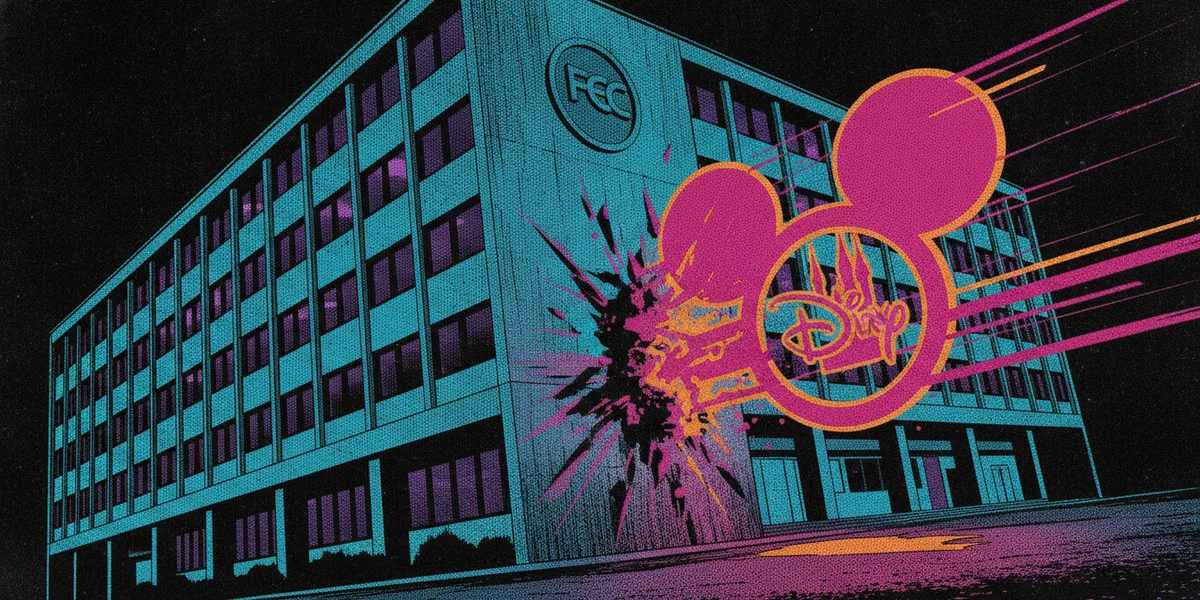
Disney and ABC are engaged in a legal battle with the FCC over the agency's license renewal process for ABC's stations, amid allegations of political bias and concerns about editorial independence.
Timeline
Now
FCC orders early ABC license renewals
EscalationWalt Disney Company and ABC filed a lawsuit against the Federal Communications Commission (FCC) on August 18, 2026, seeking to block the agency's order for early license renewals for its eight owned stations.
39 sources · The Guardian, CBS News
FCC Chairman Brendan Carr defended the agency's ongoing review of eight ABC broadcast licenses, emphasizing the need for broadcasters to operate in the public interest.
11 sources · AP, NBC News
ABC submitted its formal response to the FCC, arguing that the agency's investigation into 'The View' undermines editorial independence and violates First Amendment rights.
14 sources · NPR, Reuters
FCC orders early ABC license renewals
EscalationABC formally charged the FCC with threatening its station licenses in a retaliatory manner in its latest document filing. The network's response came after the FCC ordered it to apply for early license renewals, a request that raised suspicions of political bias given its timing with remarks made by President Trump.
5 sources · New York Times, Dailysignal
ABC filed a petition with the Federal Communications Commission on May 8 accusing the agency of violating its First Amendment rights in its scrutiny of the talk show 'The View.
8 sources · New York Times, Ars Technica
Federal Communications Commission ordered The Walt Disney Company to submit early renewal applications for its ABC television station licenses, initially scheduled for 2028-2031, within 30 days, citing potential compliance violations related to diversity, equity, and inclusion practices.
17 sources · NPR, Fox News
Federal Communications Commission confirmed it has opened enforcement proceedings against ABC's daytime program 'The View' to assess whether it qualifies for the 'bona fide news' exemption from the equal time rule.
10 sources · Reuters, Newsweek
- Origin Feb 19, 2026
The story so far
As of August 18, 2026
This is a licensing and enforcement fight that has turned a routine renewal calendar into a test of federal leverage over broadcast content. The FCC opened an enforcement proceeding to determine whether The View qualifies for the bona fide news exemption to the equal time rule, then in April ordered Disney’s eight ABC owned-and-operated stations to file renewal applications years early, tying the acceleration to alleged compliance issues involving diversity, equity, and inclusion. The order gave 30 days to prepare applications that normally take months and marked the first early-renewal demand in more than half a century. The stations cover New York, Los Angeles, Chicago, Philadelphia, Houston, San Francisco, Raleigh-Durham, and Fresno, with licenses not otherwise due until 2028 to 2031.
What makes this a constitutional case is the collision between a broadcaster’s editorial independence and the FCC’s public interest standard. Disney and ABC say the sequence is retaliatory, pointing to the President’s calls to terminate broadcast licenses and to fire Jimmy Kimmel, and to a 2025 on-air suspension that followed public criticism from FCC Chairman Brendan Carr. Carr has defended the agency’s scrutiny, saying broadcasters on public airwaves must meet obligations that do not apply to cable or streaming, and he has questioned whether The View still fits a 2002 staff ruling that treated it as news for equal time purposes.
The fight now sits in federal court. On August 18 Disney and ABC sued the FCC in Washington, seeking a temporary restraining order and preliminary injunction to halt the early-renewal process and block any move toward a hearing designation. The FCC’s review of the eight licenses remains open, as does its The View inquiry. ABC has lodged formal responses at the commission arguing the proceedings chill protected speech and intrude on editorial judgment.
The real stake is less an immediate revocation and more the pressure created by an unusually timed, resource-intensive renewal and the prospect of a hearing that could drag on and shape programming decisions in the meantime. The rarity of an early-renewal order, its sweeping scope across eight flagship stations, and the focus on specific programs explain why Disney calls the situation an existential threat. What the court decides will define how far a commission can press DEI compliance and candidate-access rules through licensing without crossing into control of what a broadcaster puts on air.
Each entry is synthesized by AI from the reports linked on it, and labeled with the kind of change it represents. How Frameshift works · What the labels mean · Report an error
In the app
Read this timeline in Frameshift
Four stories are free on the web. The full Vault, with every timeline and brief, is in the app.