
DevelopingForeignTimeline
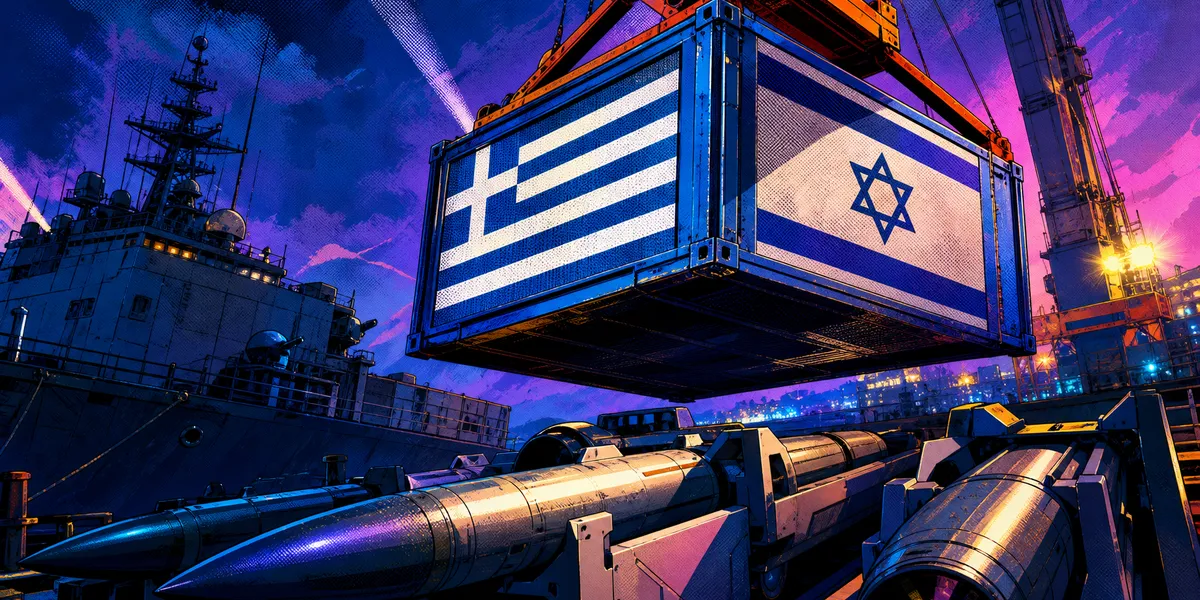
Greece–Israel Air Defense Deal
Updated 2 updatessince 42 outlets
The Greece-Israel missile deal saga centers on a $3.5 billion defense agreement signed in August 2026, which coincides with Lebanon seeking Greece's support for a US-backed peace framework with Israel.
Timeline
Now
Lebanese President Joseph Aoun requested Greece's support in enforcing a US-sponsored framework agreement with Israel, aimed at ceasing hostilities along the Israel-Lebanon border.
13 sources · News18, India Today
On August 31, Greece signed a $3.5 billion defense agreement with Israel during a ceremony in Tel Aviv.
35 sources · bankingnews.gr, Arutz Sheva Israel News
- Origin Aug 31, 2026
The story so far
As of August 31, 2026
Greece has bought a national air defense network from Israel for about €3 billion ($3.5 billion), the largest deal between the two countries and among Israel’s biggest exports. Signed in Tel Aviv by Israel’s defense ministry chief Amir Baram and Greece’s procurement leader Ioannis Bouras, the program known as Achilles Shield will link radars, interceptors and a new national command center to spot and shoot down drones, cruise missiles, aircraft and certain ballistic missiles. The package centers on three Israeli systems — David’s Sling, SPYDER and BARAK MX — plus ELTA MMR surveillance radars and, in a separate €26 million contract, Drone Dome units to protect key sites from unmanned aircraft. Greece is set to become only the second European customer for David’s Sling, and the array is scheduled to reach full readiness in roughly 35 months after a three‑year negotiation.
This is not a single weapons buy but an imported architecture. Israel will supply the software and command center that fuse data from all sensors and decide, with human oversight and machine‑assisted analysis, which interceptor to fire at which target. That puts the operating logic of Greece’s air defense in an Israeli‑built system, which is why the purchase is treated in Athens as more than hardware. The agreement includes promises of technology transfer and work for Greek firms, but the backbone is all Israeli‑made, by design.
The deal is shaped by the threats Greece worries about and by what has worked recently in combat. David’s Sling was used this year against Iranian missiles, and European demand for U.S. Patriot batteries has outstripped supply, which helps explain Athens’ choice. Greece already spends about 3.5 percent of its economy on defense and has laid out a broader plan of roughly €28 billion through 2036 for Achilles Shield, up to 40 F‑35s from the United States, and new frigates from France and Italy. In the region, both Greece and Israel have hard edges with Turkey, and Turkish media reaction to Achilles Shield was immediate and hostile, framing it as a dangerous shift in the Eastern Mediterranean.
What this story has turned into is a test of how far Greece will integrate its security with Israel in exchange for speed and proven systems, and whether that changes the balance with Ankara. On the same day the contract was signed, Turkey, Saudi Arabia and Pakistan convened the first committee meeting of their Mecca Joint Defense Agreement in Istanbul, underscoring parallel alignments taking shape. Also that day, Lebanon’s President Joseph Aoun asked Athens to help enforce a U.S. framework to stop fire along the Israel‑Lebanon border, a sign that neighbors see Greece as a channel into Israeli decision‑making. The immediate stakes are practical: standing up the national command center, fielding layers across Greek territory, and translating promised technology transfer into real control and know‑how.
Each entry is synthesized by AI from the reports linked on it, and labeled with the kind of change it represents. How Frameshift works · What the labels mean · Report an error
In the app
Read this timeline in Frameshift
Four stories are free on the web. The full Vault, with every timeline and brief, is in the app.