
DevelopingSocialTimeline
India Protests 2026
Updated 8 updatessince 57 outlets
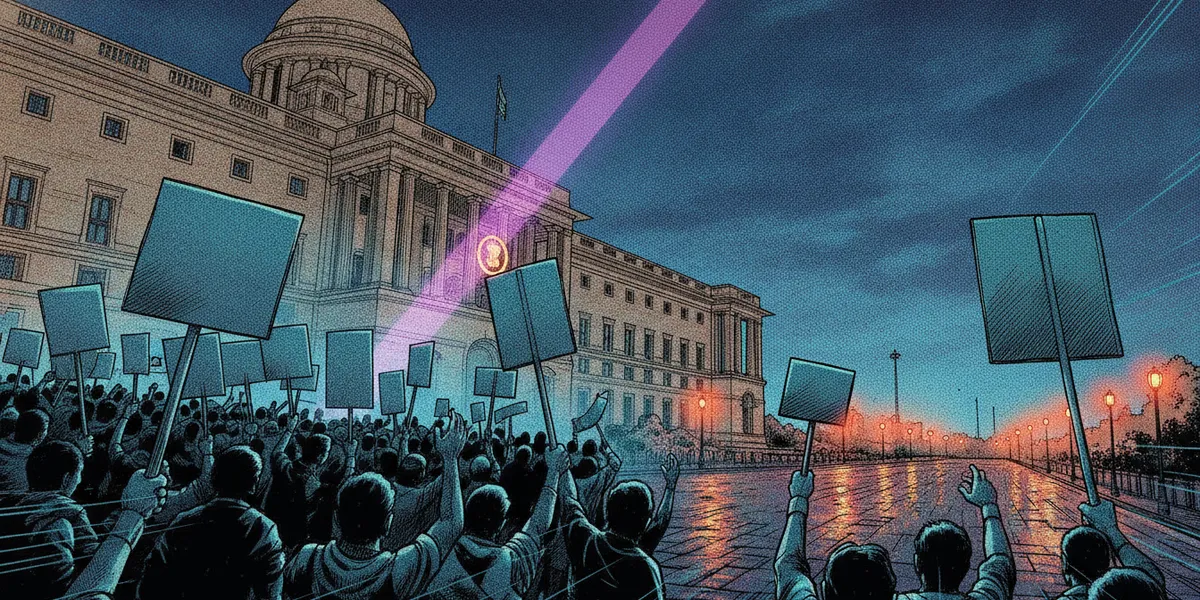
Protests against Prime Minister Narendra Modi's government in India are escalating, driven by a 20% ethanol fuel mandate and youth-led movements, amid ongoing police crackdowns and political tensions.
Timeline
Now
Youth-led Cockroach movement in India is gaining traction, with reports emphasizing the increasing participation and support from various demographics, despite police crackdowns.
12 sources · Washington Post, BBC
BJP and opposition parties publicly disagreed over police actions against protesters amid ongoing protests against Prime Minister Narendra Modi's government.
15 sources · Reuters, DW
Opposition leader Rahul Gandhi led a protest march towards Prime Minister Narendra Modi's residence on July 22, 2026, resulting in a violent confrontation with police, which involved the use of tear gas.
15 sources · BBC, Reuters
Opposition leaders, including Rahul Gandhi, joined student protests outside Modi's residence, responding to a crackdown on protests by police.
7 sources · Reuters, Al Jazeera
Police forcibly removed Rahul Gandhi and other Congress leaders from a rally outside Prime Minister Modi's residence, leading to heightened tensions.
16 sources · BBC, Reuters
Over 10,000 protesters from the youth-led Cockroach movement marched toward India's Parliament in a major demonstration against Prime Minister Narendra Modi’s government.
9 sources · AP, BBC
Police in India used tear gas and batons on large crowds protesting the frequent leaks of college entrance exams, marking one of the biggest challenges to Prime Minister Modi's leadership in recent years
12 sources · BBC, Amnesty
Vehicle owners in India are intensifying their protests against Prime Minister Narendra Modi's government due to a mandatory 20% ethanol-blended fuel policy.
11 sources · Reuters, Livemint
- Origin Jul 8, 2026
The story so far
As of July 22, 2026
A summer wave of anti-government protests in India has widened into a test of Prime Minister Narendra Modi’s authority, the state’s policing practices, and how quickly institutions answer youth and consumer grievances. Vehicle owners and students, joined by opposition parties, are challenging a mandatory 20% ethanol-blended fuel policy and the integrity of college entrance exams. The fight now runs in two arenas at once: on Delhi’s streets around Parliament and the prime minister’s residence, and inside Parliament, where opposition parties have disrupted proceedings to back the students.
Fuel anger primed the ground, but the repeated exam leaks turned scattered complaints into a mass youth-led campaign. The Cockroach movement drew more than 10,000 people toward Parliament, where police used tear gas and batons and Parliament security went on high alert; Delhi Metro services were curtailed and organizers counted around 180 injuries. A hunger strike that left a key figure hospitalized has become a rallying point, sustaining momentum after crackdowns and dispersals.
Opposition leaders including Rahul Gandhi joined sit-ins outside the prime minister’s house, were detained and then released, and returned to the protests with MPs in black inside Parliament. Priyanka Gandhi Vadra and Akhilesh Yadav were also removed from the protest site. Street confrontations spread beyond Delhi as BJP and Congress workers clashed in Jaipur, Patna, Hyderabad, and Dehradun. The government has opened the door to discussion on the exam leaks and the education minister has promised reforms and debate, even as police continue to contain marches near sensitive zones.
What the story has become is a stress test of legitimacy and responsiveness. Concrete triggers explain the coalition’s breadth: exam integrity that touches millions of families and a fuel mandate that affects daily costs and vehicle performance. The government’s technical case on E20, including an admission of up to a 5% mileage drop but no engine damage, hints at policy calibration alongside signals of delaying a higher E25 blend, while exam bodies have postponed tests and police have made arrests in leak probes. Policing choices pulled national opposition figures into the streets and forced the contest into Parliament, and the movement’s ability to keep cross-demographic backing now hinges on whether promised fixes translate into visible changes quickly enough to lower the temperature.
Each entry is synthesized by AI from the reports linked on it, and labeled with the kind of change it represents. How Frameshift works · What the labels mean · Report an error
In the app
Read this timeline in Frameshift
Four stories are free on the web. The full Vault, with every timeline and brief, is in the app.