
DevelopingPoliticsTimeline
JD Vance–Israel–GOP Rift
Updated 4 updatessince 71 outlets
JD Vance's outreach to pro-Israel advocates focuses on balancing criticism of the Israeli government with support for U.S.-Israel relations, as he navigates rising skepticism about his stance.
Timeline
Now
JD Vance delivered a closed-door speech to pro-Israel Republicans, seeking to mend relations amid increasing skepticism about his pro-Israel stance.
42 sources · Politico, New York Times
JD Vance criticized members of the Israeli government for allegedly trying to influence U.S. opinion against a recent Iran deal during a podcast with Joe Rogan.
19 sources · BBC, Reuters
J.D. Vance, Vice President, cautioned pro-Israel advocates against equating criticism of the Israeli government with antisemitism in a podcast appearance.
12 sources · New York Times, Reuters
JD Vance criticized Israeli cabinet ministers for their attacks on the U.S.-Iran deal, highlighting the importance of the U.S.-Israel alliance. He asserted that Israeli officials should recognize Trump's support as their only powerful ally and challenged them to propose alternatives to their aggressive stances.
19 sources · Washington Post, AP
- Origin Jun 18, 2026
The story so far
As of September 1, 2026
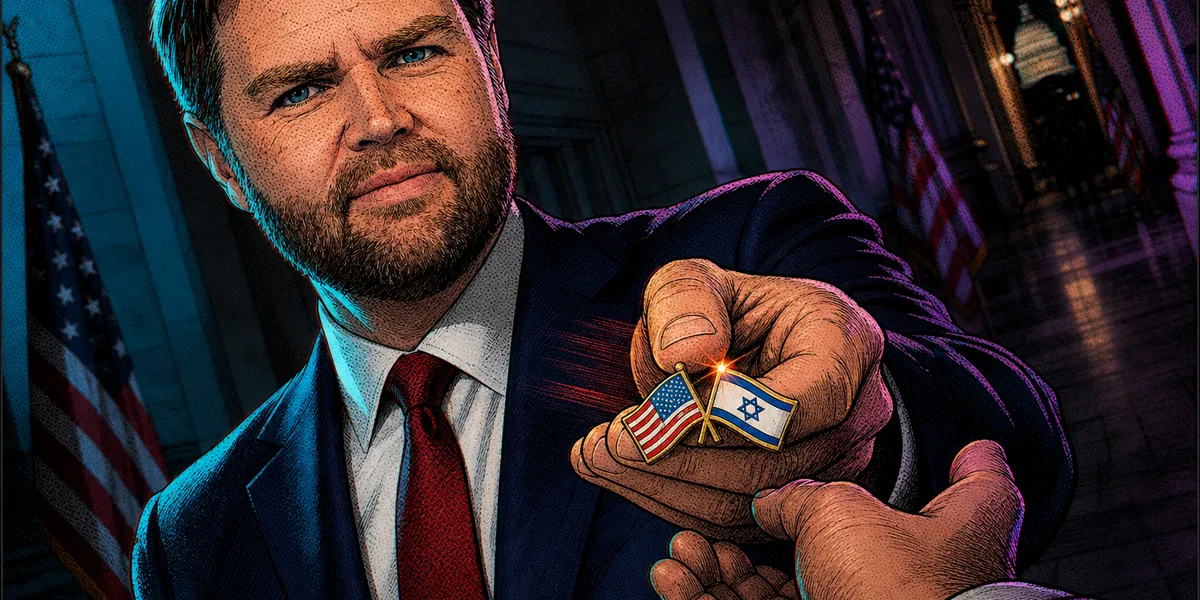
This story is about how the Republican Party’s likely 2028 frontrunner has tested the limits of its longstanding posture on Israel and is now trying to repair the damage. As vice president, JD Vance rebuked Israeli cabinet ministers for attacking a U.S. deal to end the war with Iran, warning them not to alienate “the only powerful ally” Israel has. Weeks later, on Joe Rogan’s podcast, he said some Israeli officials tried to manipulate U.S. opinion to keep the war going. That mix of sharp public criticism and talk of influence campaigns unsettled Jewish Republicans. He is now seeking to calm them with a closed-door appearance before the Republican Jewish Coalition in Las Vegas.
What turned a policy fight into an internal party test were two lines Vance drew. He separated U.S. and Israeli interests and cautioned pro-Israel advocates not to label criticism of an Israeli government as antisemitism, saying, “if everything is Jew hatred, then nothing is Jew hatred.” He also put specifics to his influence charge, pointing to a contract that paid Brad Parscale’s firm $1.5 million a month to run a large digital campaign for Israel aimed at U.S. audiences. He named ministers Bezalel Smotrich and Itamar Ben-Gvir and pressed them to offer an alternative to endless war. In response, some Jewish Republican activists began leaning toward Secretary of State Marco Rubio, while rivals such as Sen. Ted Cruz worked to stir doubts about Vance’s reliability on Israel.
Where it stands now is a test of message control and coalition management. Vance’s Las Vegas outreach was private and billed as an olive branch. He leaned on personal ties to Israel and affirmed the alliance, did not break with appearances alongside Tucker Carlson, and left intact his argument that close allies can disagree in public. He and Benjamin Netanyahu have held direct, candid talks to manage the rift that opened around the Iran deal, but Vance remains the face of that diplomacy inside his own party.
What is at stake is whether Republicans keep treating alignment with Israel as automatic or move toward Vance’s separation of interests and sharper line-drawing between antisemitism and policy criticism. That choice will shape donor and activist loyalties ahead of 2028 and set the party’s tone on claims of foreign influence. The facts that explain the rest are straightforward: a sitting vice president led the Iran negotiations, told Israeli ministers to stop attacking the White House, alleged attempts to sway U.S. opinion, and then took that case directly to the Jewish Republicans most unsettled by it.
Each entry is synthesized by AI from the reports linked on it, and labeled with the kind of change it represents. How Frameshift works · What the labels mean · Report an error
In the app
Read this timeline in Frameshift
Four stories are free on the web. The full Vault, with every timeline and brief, is in the app.