
DevelopingGeneralTimeline
Lake Ontario Naming Dispute
Updated 4 updatessince 46 outlets
The Lake Ontario naming dispute ignited when President Trump proposed renaming it 'Lake America' amid trade tensions with Canada. The situation escalated with pushback from Canadian officials, Indigenous groups, and map services.
Timeline
Now
President Donald Trump signed an executive order to rename Lake Ontario to 'Lake America.
10 sources · News18, The Daily Beast
MapQuest announced it will not rename Lake Ontario to Lake America, contrary to President Trump's executive order. As a result, the app experienced a surge, reaching number one in navigation apps in the U.S.
17 sources · TechCrunch, Newsweek
Ontario Premier Doug Ford unveiled a new sign at Fifty Point Conservation Area, reading 'Lake Ontario - Now and Always,' condemning President Trump's recent executive order to rename the lake to 'Lake America.
16 sources · Reuters, ABC News
On August 25, 2026, President Donald Trump posted on Truth Social that "The United States is giving serious consideration to changing the name of Lake Ontario to Lake America," amid an escalating trade dispute with Canada.
5 sources · 13WHAM-TV, ABC News - Breaking News
- Origin Aug 25, 2026
The story so far
As of August 31, 2026
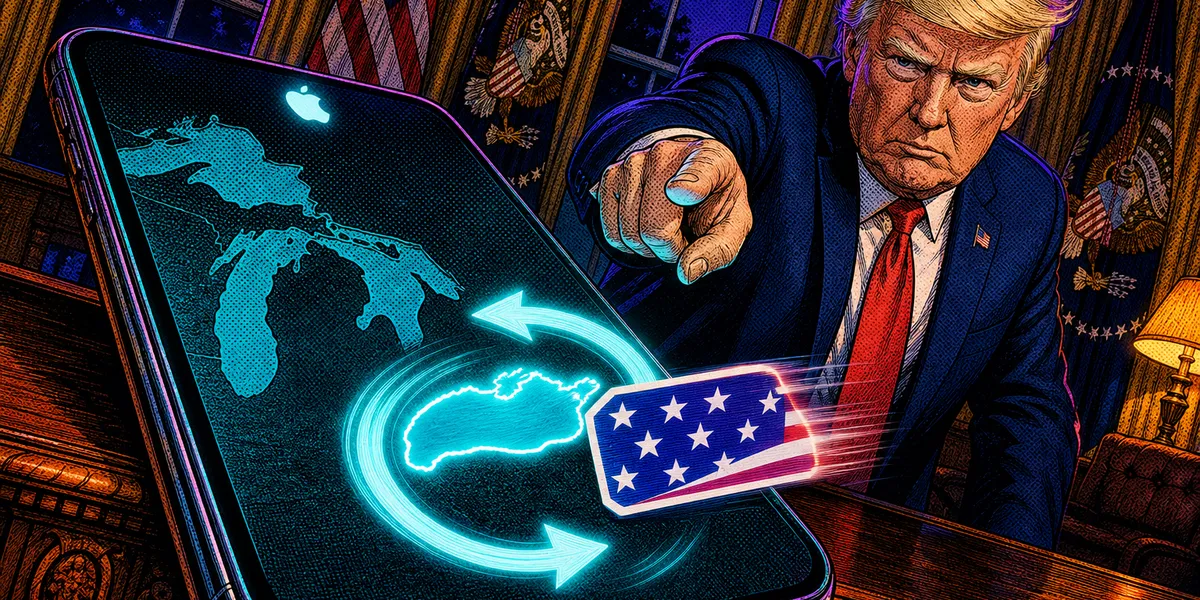
What began as a social post is now a formal U.S. action: President Donald Trump signed an executive order to rename Lake Ontario as Lake America inside the United States, and the federal names database was updated to match. Google Maps has switched the label for users in the U.S., while showing Lake Ontario in Canada and both names elsewhere. Apple Maps has not changed the lake’s label yet; Interior Secretary Doug Burgum said the president reached out to Apple directly about making the switch. MapQuest refused to adopt the new name and kept Lake Ontario on its maps.
The order’s reach is the point of tension. It binds federal usage and data inside the U.S., but it cannot force Canada or private companies to change a shared waterway’s name. The Great Lakes are governed jointly, and Canadian officials say the lake will remain Lake Ontario in their systems. Ontario Premier Doug Ford installed a large shoreline sign reading Lake Ontario – Now and Always, and Prime Minister Mark Carney has defended the historic name. Indigenous leaders, including the Seneca Nation, object to the U.S. move and point to the lake’s name originating from the Wendat term Ontari’io.
The practical fight is playing out on screens. Because many platforms follow official sources by country, a U.S.-only database change produces different labels in different places and even bleeds into Canadian government websites that embed Google Maps, prompting Ontario’s public services minister Stephen Crawford to review pages to restore Lake Ontario. Mapping companies are being forced to pick a rule: mirror each country’s official names, hold the line on a single label, or localize by audience.
The naming clash rides on a larger trade confrontation. The U.S. has imposed 50 percent tariffs on about 20 billion dollars of Canadian goods, with a 50 percent tariff announced for all Canadian automotive and steel imports starting in January; Canada has moved to match with tariffs of up to 50 percent on a similar value of U.S. imports. That context explains the pressure on Apple and the fast update by Google, and it also explains MapQuest’s surge after defying the change: hundreds of thousands of new downloads, a 50-fold jump in usage, and a rise to number one among navigation apps in the U.S. The stakes now are who effectively controls the names people see day to day — a federal database, a neighboring government that shares the water, or private platforms setting their own policies.
Each entry is synthesized by AI from the reports linked on it, and labeled with the kind of change it represents. How Frameshift works · What the labels mean · Report an error
In the app
Read this timeline in Frameshift
Four stories are free on the web. The full Vault, with every timeline and brief, is in the app.