
DevelopingConflictTimeline
Ratko Mladić's Funeral Controversy
Updated 3 updatessince 60 outlets
The saga revolves around Ratko Mladić's funeral in Belgrade, raising international concerns over Serbia's EU membership prospects due to the country's response to honoring the convicted war criminal.
Timeline
Now
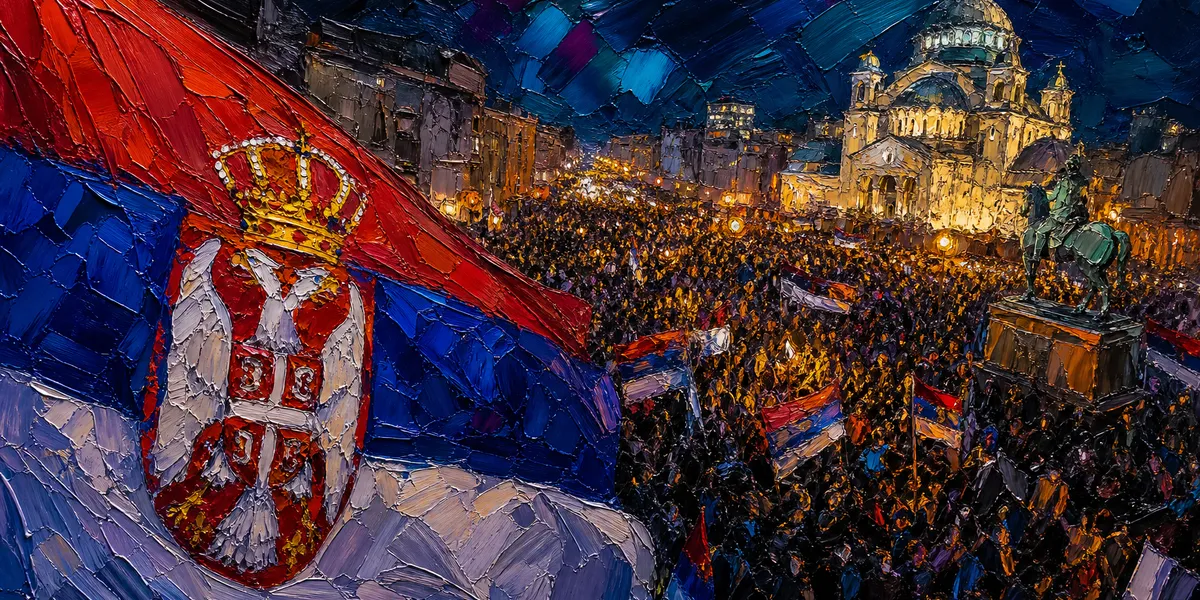
Thousands gathered in Belgrade for the funeral of Ratko Mladić, a convicted war criminal.
49 sources · Inquirer, Haberler.com
EU's enlargement chief warned that Serbia's handling of Ratko Mladić's funeral will critically test the country's ambitions for EU membership.
12 sources · Bloomberg, Reuters
Covered by 13 outlets
1 source · Times of Malta
- Origin Aug 27, 2026
The story so far
As of September 7, 2026
Ratko Mladić, the Bosnian Serb commander convicted of genocide and other war crimes, was buried in Belgrade after his coffin lay in state at the Church of St. Luke. The Serbian Orthodox patriarch, Porfirije, led the service. Thousands came, many carrying flags and portraits, and chanted “hero” as the procession moved to Topčider cemetery, where Mladić was laid to rest beside his daughter.
What has turned this into a national rupture is the gap between how officials describe the event and how it unfolded. The government called it a family funeral, yet a state plane brought the body from The Hague, soldiers carried a coffin draped in the Serbian flag, and the army provided honors, including a gun salute and the national anthem. Ministers attended despite earlier assurances that serving officials would not. A further fault line is legal: under Serbia’s armed forces law, a person sentenced to more than a year in prison loses rank and the privileges tied to it, which makes any military tribute to a convicted general a point of contention inside Serbia’s own rulebook.
Abroad, the reaction has been immediate and concrete. The European Union’s enlargement chief, Marta Kos, canceled a visit and warned that glorifying a man convicted of genocide is incompatible with the standards Serbia must meet to join the bloc. That helps explain the mixed signals from Belgrade: President Aleksandar Vučić said the family would decide on honors and did not attend, while parts of the state apparatus nonetheless treated the funeral as an occasion of national respect. The stakes are Serbia’s credibility on European integration and its willingness to uphold international judgments and its own laws when domestic politics cut the other way.
The funeral capped a broader wave of public celebration that reached into mainstream culture. On the eve of the burial, Red Star Belgrade fans unveiled a giant Mladić display and a minute of silence was held during the city’s biggest football match, days after the club was fined by European football authorities for earlier tributes. Russian nationalist bikers, the Night Wolves, also appeared among mourners. These specifics show what is at issue now: whether Serbia’s institutions can draw and enforce a line against honoring convicted war criminals, or whether public life—from church and army to sport—normalizes that honor, with consequences for its neighbors and its path toward the European Union.
Each entry is synthesized by AI from the reports linked on it, and labeled with the kind of change it represents. How Frameshift works · What the labels mean · Report an error
In the app
Read this timeline in Frameshift
Four stories are free on the web. The full Vault, with every timeline and brief, is in the app.