
DevelopingPoliticsTimeline
Sweden's 2026 Election
Updated 2 updatessince 35 outlets
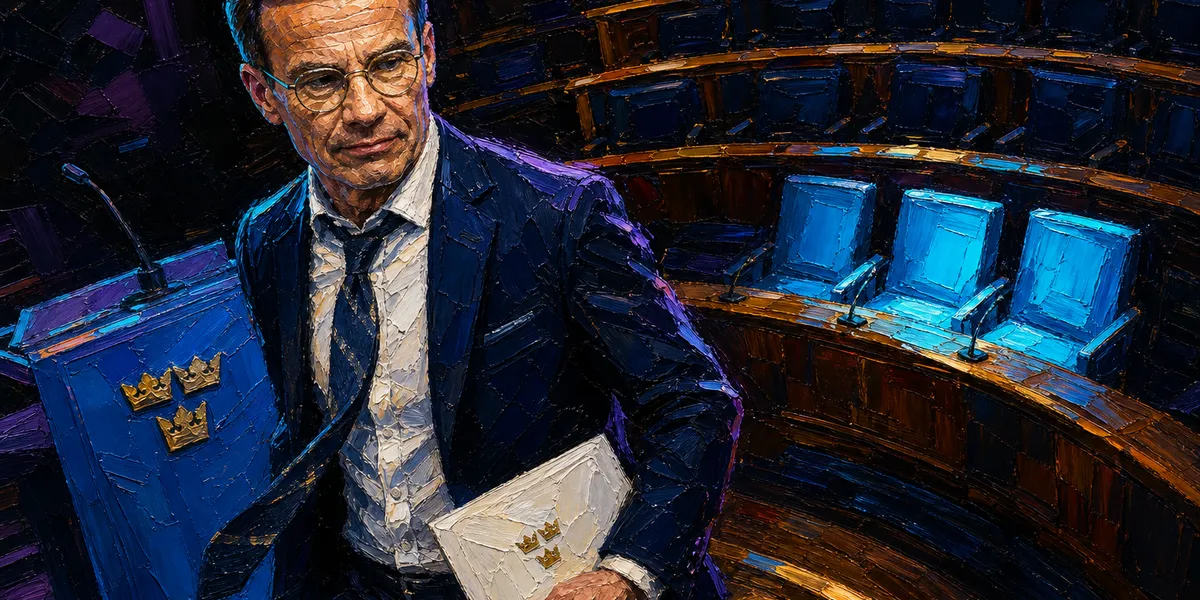
Following a narrow defeat in the 2026 general election, Ulf Kristersson has resigned as Sweden's Prime Minister, leading to a shift in power to the left-leaning opposition bloc in the Riksdag.
Timeline
Now
Ulf Kristersson stepped down as Sweden's Prime Minister following a narrow defeat in the recent general election, where his right-leaning bloc lost 176 seats to the left-wing opposition's 173 in the Riksdag.
34 sources · The News International, The Guardian
Sweden's Election Authority announced that the left-leaning opposition bloc won a narrow majority in the 349-seat Riksdag, finalizing the election count. That confirmation prompted Prime Minister Ulf Kristersson to post a letter saying he would resign as head of government. ([apnews.com](https://apnews.
1 source · AP
- Origin Sep 17, 2026
The story so far
As of September 17, 2026
Sweden’s election count is complete, and the left-leaning opposition now holds 176 of the 349 seats in the Riksdag, three more than the parties that backed the outgoing government. Prime Minister Ulf Kristersson has resigned. The Social Democrats finished as the largest single party with 99 seats, positioning their leader, former prime minister Magdalena Andersson, to try to form a government. The margin in votes was about 50,000, and the outcome hinged on late and overseas ballots.
The next move belongs to the speaker of parliament, Andreas Norlén, who will consult party leaders and propose a prime minister. Under Sweden’s rules, a nominee is approved unless a majority of lawmakers vote no, which means Andersson must prevent 175 votes against her rather than assemble 175 in favor. The earliest parliament can vote on a new prime minister is September 29. Minority governments are common in Sweden, and agreements outside the cabinet often decide who can govern and whose budget passes.
What this story has turned into is a test of whether Andersson can knit together a working arrangement among parties that disagree with each other more than they disagree with the outgoing right on some issues. The Centre Party moved left to avoid governing with the Sweden Democrats, but says it will not sit in a cabinet that includes the socialist Left Party. The Left Party wants a minister in return for support. That clash, plus gaps on taxes and energy policy, is the core obstacle that explains why a numerical majority has not yet become a government.
Two facts shape the stakes. First, the Sweden Democrats slipped to third place with 62 seats, which weakens the right’s leverage and closes the door, for now, on the cabinet role Kristersson had floated for them. Second, there is broad agreement in parliament on some major directions, including support for Ukraine and Sweden’s recent entry into NATO, so the fight is mostly over taxes, welfare, climate and immigration at home. If Andersson cannot secure enough tolerance in parliament, Kristersson will get a turn, and Sweden’s rules allow up to four failed prime minister votes before a new election must be called.
Each entry is synthesized by AI from the reports linked on it, and labeled with the kind of change it represents. How Frameshift works · What the labels mean · Report an error
In the app
Read this timeline in Frameshift
Four stories are free on the web. The full Vault, with every timeline and brief, is in the app.