
DevelopingConflictTimeline
Taiwan–China Coast Guard Standoff
Updated 1 updatesince 19 outlets
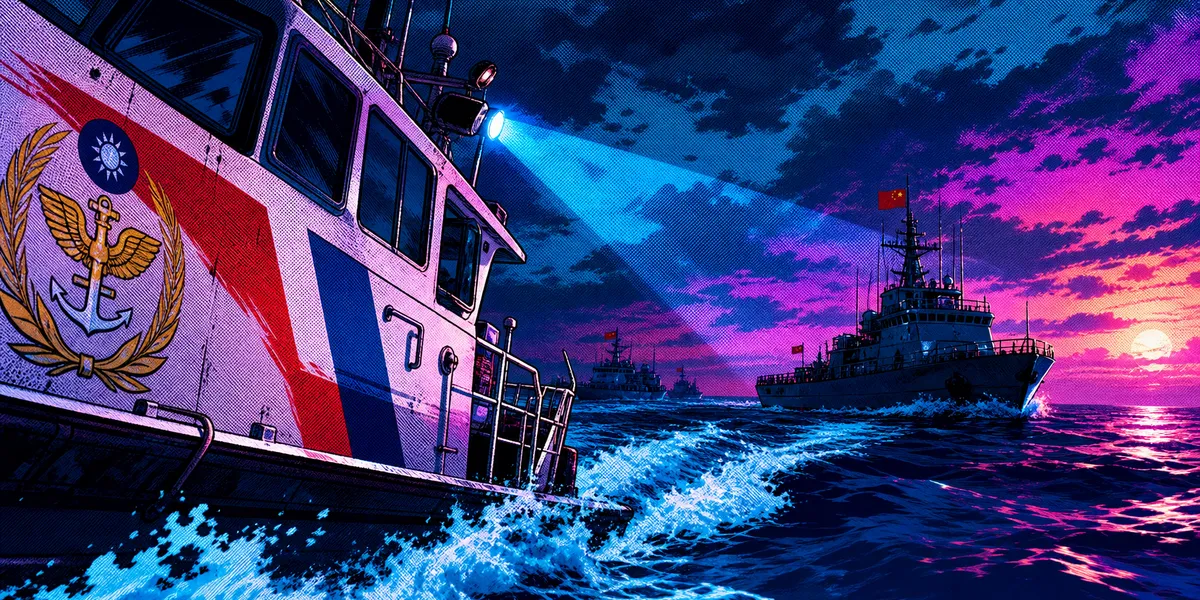
The Taiwan–China Coast Guard standoff centers on escalating tensions over maritime sovereignty, with Taiwan on high alert against Chinese patrols as it asserts its commitment to defending its territorial waters.
Timeline
Now
Taiwan Coast Guard reported monitoring Chinese patrols east of its waters, labeling them as an effort by Beijing to expand its control. In response, Taiwan vowed to defend its sovereignty and ensure maritime security.
19 sources · Reuters, Bloomberg
- Origin Jul 31, 2026
The story so far
As of July 31, 2026
China’s coast guard has shifted pressure to the Pacific side of Taiwan, running what it calls routine law enforcement patrols in waters east of the island. On July 31, two Chinese coast guard ships, Xiushan and Chongming, were tracked near Lanyu (Orchid Island), one about 151 nautical miles to the east and the other about 43 nautical miles to the northeast. Chinese vessels in recent weeks have also issued radio warnings telling passing merchant ships to leave. Taiwan has sent its own patrols, including the ship Taipei, to shadow and challenge the Chinese boats and says it will take necessary measures to defend its waters.
This has become a contest over who sets day‑to‑day rules on the sea lanes Taiwan would rely on in a crisis. By using coast guard ships and the language of law enforcement, Beijing is pressing to extend practical control without triggering a naval clash. Radio challenges to commercial traffic and visible rotations of named task groups point to an effort to make the patrols routine. China has tied the eastern operations to separate talks between Japan and the Philippines over maritime boundaries, underscoring that the push sits on a wider arc of pressure running from Japan past Taiwan to the Philippines.
Taiwan is adjusting in concrete ways. Its annual Han Kuang drills now practice navy and coast guard escorts for supply convoys east of the island, decentralize battlefield decision‑making, and link reconnaissance and attack drones into a single strike process. Taipei is building a cross‑agency playbook for maritime contingencies and plans to integrate counter‑drone defenses across the military, coast guard, police and major infrastructure operators by the end of next year under a single coordinating authority. Domestic budget fights have slowed parts of the drone build‑out, with trimmed funding now the subject of rival proposals.
Outside players are signaling that the issue is larger than a Taiwan–China spat. The United States made public a photo of its coast guard sailing in formation with a Taiwan vessel and its regional commander warned against coercion, while Britain, France and Germany issued a joint statement of concern. At stake is who effectively polices the waters east of Taiwan and whether commercial ships there take instructions from Beijing; if these patrols become the new normal, the balance over freedom of navigation and wartime resupply routes shifts without a shot fired.
Each entry is synthesized by AI from the reports linked on it, and labeled with the kind of change it represents. How Frameshift works · What the labels mean · Report an error
In the app
Read this timeline in Frameshift
Four stories are free on the web. The full Vault, with every timeline and brief, is in the app.