
DevelopingConflictTimeline
The U.S.–Canada Trade War
Updated 15 updatessince 189 outlets
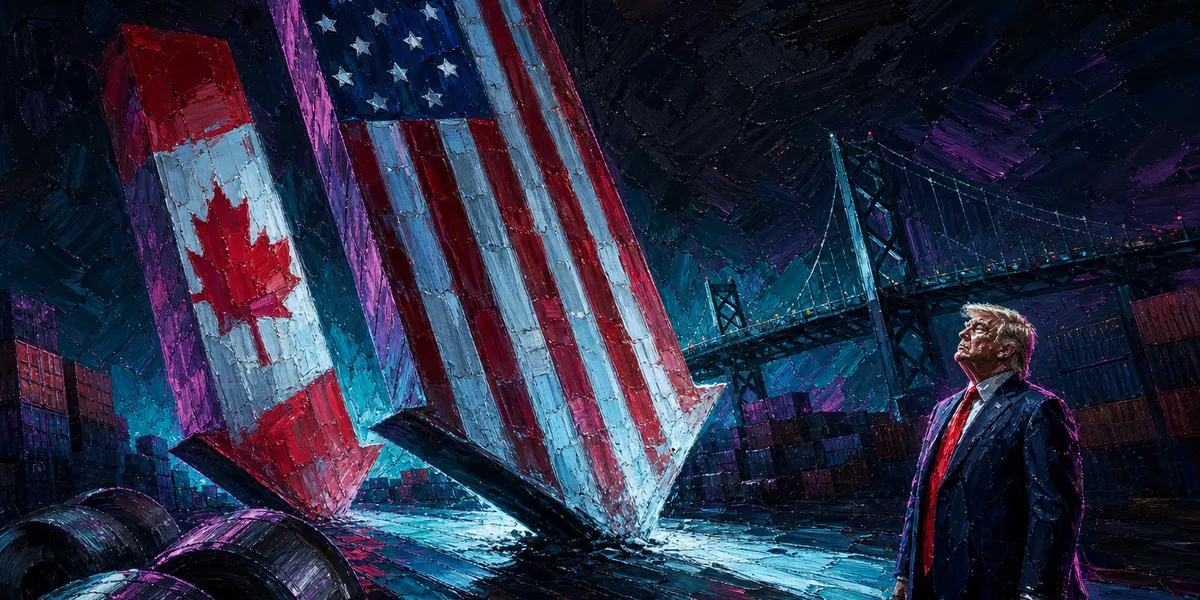
The U.S.–Canada Trade War began with President Trump's 50% tariffs on Canadian imports, sparking retaliatory measures from Canada and escalating tensions. Diplomatic efforts continue as public sentiment shifts against the tariffs.
Timeline
Now
Recent poll indicates that 65% of Canadians and 60% of Americans believe that Donald Trump's trade policies during the trade war were misguided.
20 sources · Politico, Washington Post
Trump bans select Canadian imports
EscalationDonald Trump signed a series of executive orders on September 9, 2026, imposing new tariffs and banning imports of certain Canadian goods, including alcoholic beverages, motorcycles, and dairy products.
3 sources · The Hill, New York Times
Canada implemented retaliatory tariffs on approximately $20 billion worth of U.S. goods starting on September 8, 2026.
8 sources · ArcaMax, USA Today
Reuters/Ipsos poll indicated that 55% of Americans oppose President Trump's newly imposed tariffs on Canadian goods.
20 sources · CTV News, Reuters
Canada announced new tariffs worth about $20 billion in retaliation against the U.S., matching the 50% duties imposed by President Trump.
25 sources · AP, The Guardian
U.S. President Donald Trump indicated on August 21, 2026, that he expected the United States and Canada to reach a trade agreement ahead of a looming 50% tariff, which is set to take effect at 12:01 a.m. EDT on August 22.
24 sources · Reuters, BBC
Donald Trump set a midnight deadline for the finalization of the Canada-U.S. tariff deal on August 21, 2026. As the deadline approaches, U.S. Commerce Secretary Howard Lutnick has expressed dissatisfaction with the current state of negotiations, urging for changes to be made amid ongoing discussions between U.S.
6 sources · Reuters, bankingnews.gr
Manitoba Premier Wab Kinew criticized U.S. President Donald Trump, labeling him a 'bad person' and emphasizing that Canada should stand firm in trade talks rather than making concessions.
5 sources · Winnipeg Free Press, AOL.com
Donald Trump indicated on August 19, 2026, that the United States 'probably have a deal with Canada' regarding the ongoing tariff negotiations.
46 sources · NASDAQ Stock Market, The Motley Fool
Trump and Carney delay 50% tariffs
De-escalationAs the midnight deadline approached, President Donald Trump announced a deal with Canadian Prime Minister Mark Carney to delay the 50% tariffs on Canadian goods.
53 sources · CBS News, Fortune
Trump Advances Tariff Deadline Pressure
EscalationTrade negotiations between the U.S. and Canada intensified on August 18, 2026, as negotiators faced a looming midnight deadline to finalize a deal and avoid the implementation of a new 50% tariff on Canadian goods.
23 sources · Pulse24.com, New York Times
Trump delays 50% tariffs to August 1
De-escalationPresident Trump decided to postpone the implementation of his reciprocal tariffs to August 1, 2026, after discussions with advisors including U.S. Trade Representative Robert Lighthizer.
22 sources · Reuters, New York Times
On July 21, 2026, President Donald Trump threatened to impose more tariffs on Canada, citing issues related to wildfire smoke drifting into the U.S. This announcement follows his imposition of 50% tariffs on most Canadian goods just a day prior.
19 sources · BBC, Reuters
On July 23, 2026, President Donald Trump announced the imposition of 50% tariffs on many Canadian goods, citing unfair treatment of U.S. products under the Canada-United States-Mexico Agreement (CUSMA).
32 sources · NPR, BBC
On July 20, 2026 President Donald Trump announced he would impose 50% tariffs on imports from Canada, setting a 30-day window before they would take effect. That announcement triggered urgent diplomatic talks and formal negotiations between the U.S. and Canada to try to avert the tariffs.
7 sources · New York Times, Utility Dive
- Origin Jul 20, 2026
The story so far
As of September 23, 2026
The brinkmanship phase is over. After talks collapsed, the United States put 50 percent tariffs on roughly 20 billion dollars of Canadian goods, and Canada’s answer is now in force. As of after midnight on September 8, Ottawa is charging duties of 15 to 50 percent on more than 700 U.S. products worth about 20 billion dollars. The list was built to land on specific states and sectors and was quickly tweaked by dropping Maine seafood after feedback, a sign the fight has shifted to targeted pressure meant to change political calculations in Washington rather than just match totals. Days later, the White House expanded the fight with executive orders that ban Canadian alcohol, motorcycles and some dairy from entering the United States and that layer on more tariffs.
What had been on the table before talks broke down explains the leverage each side is using now. U.S. negotiators had floated cutting the tariff on Canadian-built vehicles to 15 percent from 25 and halving the steel and aluminum rates to 25 percent if Canada helped unwind provincial bans on U.S. alcohol that premiers adopted as leverage. Washington’s 50 percent duties are being applied under a little‑used 1930 law that allows tariffs of up to that level without an investigation and even on goods that would normally qualify under the North American trade deal. That deal was not renewed by the United States on July 1, moving it into annual reviews that can run to 2036, and the White House has already threatened further increases on Canadian cars and steel in January. With countermeasures now in force, Prime Minister Mark Carney is pairing talks with a faster push to diversify, seeking a “unique alliance” with the European Union and accelerating India‑Canada negotiations with a fifth round set for October 5 and a possible signing during Narendra Modi’s expected December visit.
The damage is concentrated but real. The new U.S. list covers about 5 percent of Canada’s exports south, with the heaviest exposure in electronics and electrical equipment, furniture, apparel, dairy and alcohol. Estimates put the hit to Canada’s economy at roughly half a percentage point of GDP, with British Columbia facing tariffs on about 14.5 percent of its U.S. shipments, Ontario bearing the largest absolute burden, and Quebec’s effective tariff rate on goods headed to the U.S. jumping toward 11 percent. Early consumer effects are showing up in essentials like paper products, and logistics costs are rising as diesel prices hit a record high. Energy planners are warning that cross‑border electricity trade and prices are at risk if the escalation continues.
Politics are now shaping the terms of de‑escalation. New polling shows 65 percent of Canadians and 60 percent of Americans say Donald Trump’s trade policies in this fight were misguided, while earlier surveys already had a U.S. majority opposing the new Canada tariffs. Premiers have not moved to lift the U.S. alcohol bans they imposed, keeping one of Ottawa’s key bargaining chips in place. In Washington, some Republicans have urged de‑escalation while others back the president, and the tariff design that Canada built to land on specific states is testing party unity where the costs are felt. The story has turned into a test of whether Ottawa’s state‑by‑state targeting and rapid trade diversification can outlast Washington’s capacity to impose sweeping penalties and product bans at speed.
Each entry is synthesized by AI from the reports linked on it, and labeled with the kind of change it represents. How Frameshift works · What the labels mean · Report an error
In the app
Read this timeline in Frameshift
Four stories are free on the web. The full Vault, with every timeline and brief, is in the app.