
DevelopingPoliticsTimeline
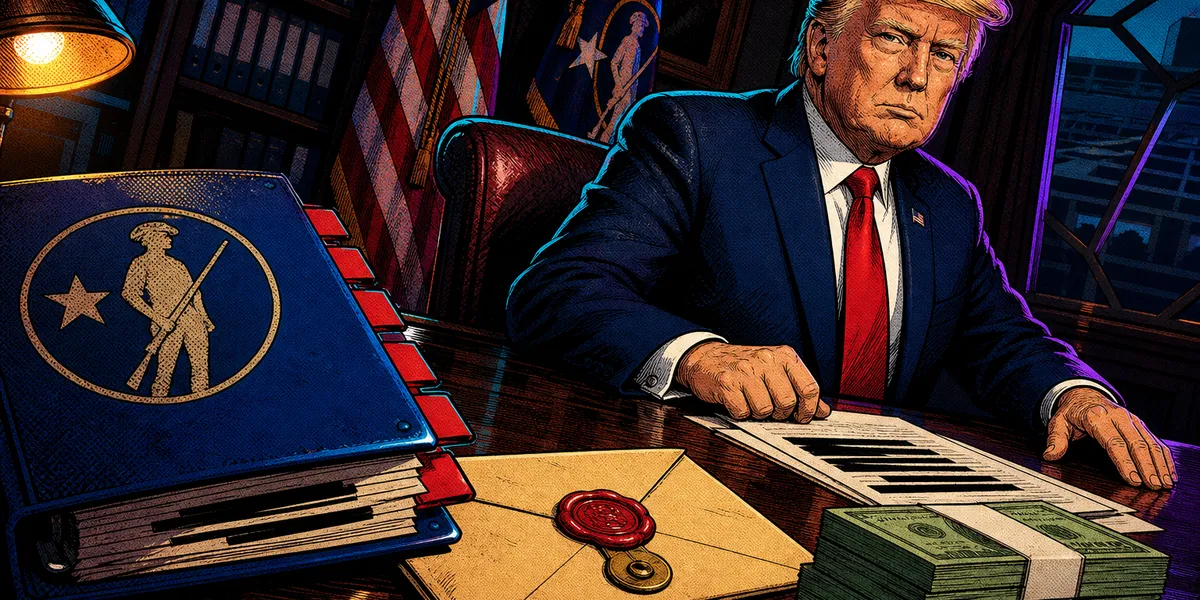
Trump's National Guard Deployments
Updated 10 updatessince 97 outlets
The saga follows President Trump's deployment of National Guard troops in various contexts, including addressing crime in New Orleans and responding to protests, amid ongoing disputes about previous deployments linked to the Capitol attack.
Timeline
Now
Trump lawyer formally requested that a liberal think tank retract a report alleging misconduct related to the National Guard.
37 sources · The Hill, New York Times
President Donald Trump threatened to invoke the Insurrection Act on January 15, 2026, to quell ongoing protests in Minneapolis against Immigration and Customs Enforcement (ICE) operations following the fatal shooting of Renee Good by an ICE agent.
21 sources · Washington Post, BBC
Oregon Guard Soldiers Return Home From Deployment
De-escalationApproximately 100 Oregon Army National Guard soldiers returned home on January 15, 2026, after completing their active duty orders related to Task Force Rose Shield.
17 sources · BBC, New York Times
President Trump stated that National Guard troops will be sent to New Orleans, responding to a request from Governor Jeff Landry. The deployment is part of a broader federal strategy to address concerns about crime in the city amid an upcoming immigration operation named 'Swamp Sweep.
20 sources · New York Times, NPR
Davidson County Chancellor Patricia Head Moskal issued a temporary injunction against the deployment of the National Guard in Memphis, stating that Governor Bill Lee lacked the authority to deploy troops without legislative approval or local requests.
26 sources · NPR, New York Times
Judge halts Oregon Guard deployment
EscalationU.S. District Judge Karin Immergut temporarily blocked President Trump from deploying 200 Oregon National Guard troops to Portland, responding to a request for a restraining order by the City of Portland and State of Oregon.
15 sources · NPR, Reuters
Illinois and Chicago filed a lawsuit against the Trump administration to block the deployment of National Guard troops intended for Chicago amidst ongoing federal immigration enforcement operations.
14 sources · BBC, NPR
D.C. Attorney General Brian Schwalb filed a lawsuit against President Donald Trump on September 4, 2025, seeking to block the deployment of over 2,300 National Guard troops in the District.
18 sources · New York Times, BBC
U.S. District Judge Charles Breyer ruled that President Trump's administration illegally deployed National Guard and Marine troops to Los Angeles to assist in law enforcement actions during protests.
17 sources · BBC, NPR
The Department of Defense Office of Inspector General published a review of the DoD’s role, responsibilities, and actions related to the January 6, 2021, U.S. Capitol attack, including timelines for National Guard deployment.
10 sources · National Academies of Sciences, Engineering
- Origin Nov 16, 2021
The story so far
As of August 21, 2026
This story tracks President Trump’s push to use the National Guard for domestic security and immigration enforcement, and the legal limits that have met it. He sought to send more than 2,300 Guard troops into Washington, D.C., faced suits over planned deployments to Chicago and Portland, and ran into court orders that halted or narrowed those moves. U.S. District Judge Karin Immergut blocked an Oregon deployment after the City of Portland and the state sought a restraining order. In Tennessee, Chancellor Patricia Head Moskal said Governor Bill Lee lacked authority to deploy Guard troops to Memphis without the legislature or a local request. In Oregon, 200 Guard members were federalized for Portland but never took to the streets; roughly 100 returned home in January after demobilizing from Task Force Rose Shield.
The facts point to a boundary question rather than a logistics one: what authority the White House can invoke to use Guard forces for law enforcement when states do not invite them. Courts have acted as the brake when deployments lacked state backing, while the New Orleans plan moved ahead because Louisiana’s governor, Jeff Landry, asked for help. The Oregon demobilization underscored that federal orders alone did not translate into on‑the‑ground operations when judges intervened and local officials objected.
The pressure point shifted in Minneapolis after an ICE agent fatally shot Renee Good, sparking protests and further clashes. Trump then threatened to invoke the Insurrection Act, a statute that would allow troops to perform law enforcement functions and would sidestep some of the constraints that stalled earlier Guard deployments. Thousands of federal officers were already in Minnesota as that threat was made, signaling an escalation from contested Guard federalizations to a different legal pathway the White House has held in reserve.
The latest development is not a troop movement but a fight over the record. Trump’s lawyer has demanded that a liberal think tank retract a report alleging misconduct tied to National Guard use and has threatened a multibillion‑dollar defamation suit. That turn shows what is at stake now: the legal and political justification for future domestic use of the Guard, whether governors’ consent remains the decisive factor, and whether the administration can clear space to use the Insurrection Act if it chooses. The pattern of halted deployments, one governor‑requested exception in New Orleans, and a pivot to contesting critics’ accounts explains where the story stands.
Each entry is synthesized by AI from the reports linked on it, and labeled with the kind of change it represents. How Frameshift works · What the labels mean · Report an error
In the app
Read this timeline in Frameshift
Four stories are free on the web. The full Vault, with every timeline and brief, is in the app.