
DevelopingDiplomacyTimeline
U.K. Sanctions on Israeli Settlements
Updated 2 updatessince 83 outlets
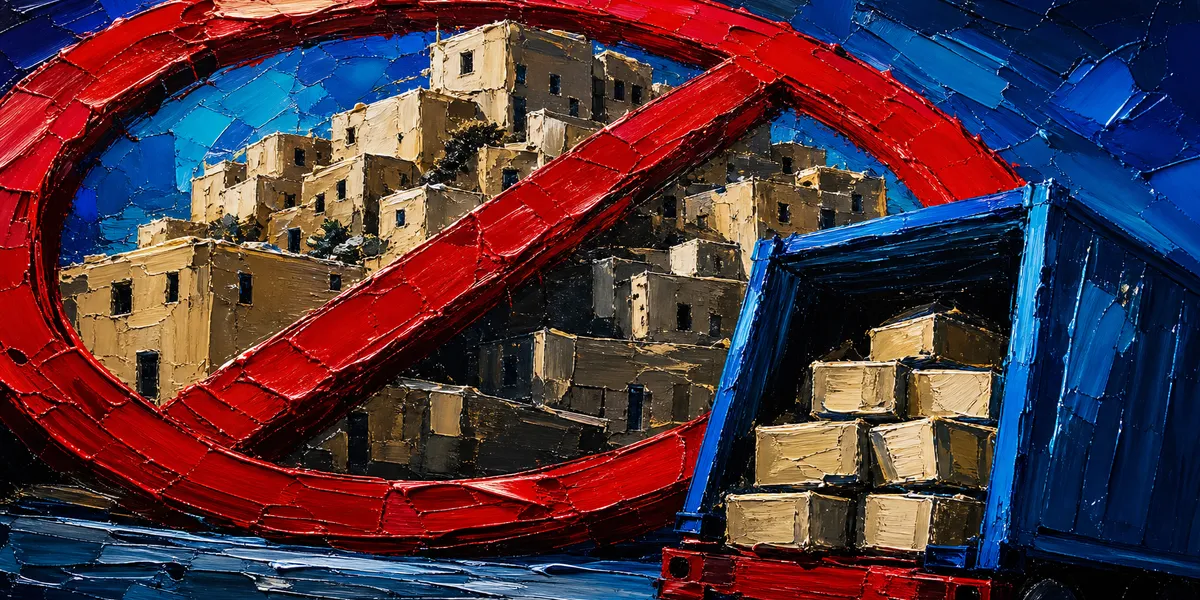
The U.K., along with Canada and France, has imposed sanctions on Israeli settlements in the occupied West Bank, banning imports and suspending weapon exports due to accusations against settler groups.
Timeline
Now
United Kingdom, alongside Canada and France, declared plans to sanction Israeli settlements in the occupied West Bank by banning imports of goods from those areas, suspending export licenses for weapons, and targeting companies aiding settlement expansion.
9 sources · NPR, The Guardian
United Kingdom has officially banned the import of goods from Israeli settlements in the occupied West Bank, citing accusations of ethnic cleansing against Palestinians by settler groups.
79 sources · Al Jazeera Online, Economic Times
- Origin Sep 8, 2026
The story so far
As of September 8, 2026
Britain has barred imports from Israeli settlements in the occupied West Bank and is restricting UK services that help expand them, while tightening rules on arms export licences that would aid the occupation. Foreign Secretary Ed Miliband told Parliament the settlements are unlawful and described the forced displacement of Palestinians by violent settler groups as ethnic cleansing. Goods and services from Israel itself are exempt. The trade at issue is small compared with overall UK–Israel commerce — an estimated £38 million of settlement goods out of roughly £6 billion in total trade last year — but the policy is the most significant shift since the UK recognised Palestinian statehood and is set to take effect within six to nine months.
London says the aim is to halt settlement growth that would erase any path to a Palestinian state, singling out plans such as the E1 project east of Jerusalem, which would split the West Bank in two. The package goes beyond an import ban: it targets financing, construction, infrastructure, real estate and even advertising tied to settlement property, and it sanctions individuals involved in violence. The test will be enforcement. Past efforts to distinguish origin at the border have struggled with mislabelling, and the impact of the new service and advertising restrictions will turn on how rigorously they are applied.
Israel has retaliated by ordering the closure of the British consulate in Jerusalem, expelling UK personnel from a Gaza ceasefire support center in Kiryat Gat, ending UK training for Palestinian Authority security forces, and barring entry to 12 elected British officials. Senior Israeli ministers have urged further steps, while Britain’s move arrived alongside a joint statement from 11 other countries — including Canada, France, Spain, Ireland, and the Nordics and Portugal and Poland — signaling parallel restrictions on settlement goods. The United States has said it will not adopt similar measures; a senior US diplomat criticized the UK decision and a Florida lawmaker threatened state-level reprisals against British firms.
What this has become is a stress test of a settlement‑only strategy: whether close allies can penalize activities in occupied territory without rupturing their broader ties with Israel, and whether that pressure alters facts on the ground that make a two‑state outcome unworkable. The small trade volume explains why London frames this as targeted and symbolic, but Israel’s closure of a British mission shows the diplomatic cost is not symbolic. The alignment of a dozen governments gives the step more weight than a lone British action, and the outcome now turns on implementation and on whether Israel escalates or contains its response.
Each entry is synthesized by AI from the reports linked on it, and labeled with the kind of change it represents. How Frameshift works · What the labels mean · Report an error
In the app
Read this timeline in Frameshift
Four stories are free on the web. The full Vault, with every timeline and brief, is in the app.