
DevelopingPoliticsTimeline
UN General Assembly: 81st Session
Updated 7 updatessince 128 outlets
The 81st UN General Assembly includes significant international dialogue and tensions, featuring speeches by various leaders, including Donald Trump and Iranian officials, amid ongoing geopolitical conflicts.
Timeline
Now
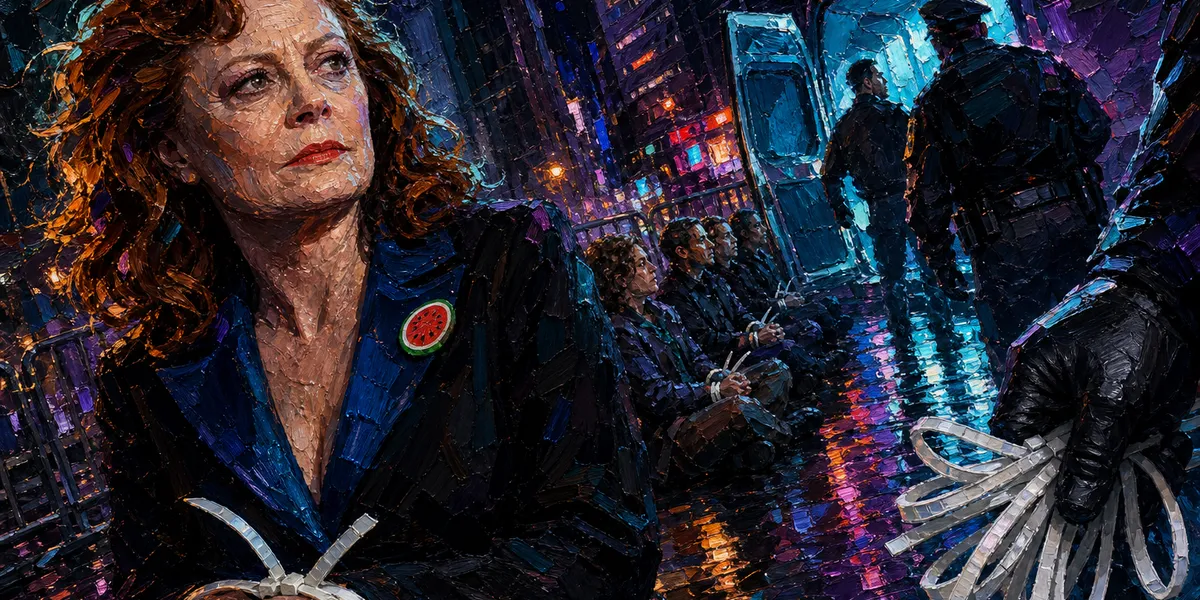
Oscar-winning actor Susan Sarandon and actress Hannah Einbinder were arrested during a Jewish Voice for Peace protest in New York against Israeli Prime Minister Netanyahu.
21 sources · The Guardian, NPR
Iranian Foreign Minister Abbas Araghchi met with U.S. officials, including Jared Kushner, on the sidelines of the UN General Assembly, marking the first significant dialogue since months of escalating conflict.
17 sources · New York Times, Reuters
Iranian President Masoud Pezeshkian addressed the United Nations General Assembly, emphasizing that Iran has been a victim of US and Israeli terrorism. He asserted Iran's commitment to dialogue while rejecting conditions of pressure and threats from the US.
38 sources · bankingnews.gr, News18
Pakistan, Iran open peace channel
New ActorPakistan's Interior Minister Mohsin Naqvi met with Iranian counterpart Eskandar Momeni in Tehran to discuss regional peace efforts.
19 sources · Bloomberg Business, Politico
Donald Trump addressed the United Nations General Assembly on September 22, 2026. After his speech, he was expected to hold discussions with British Prime Minister Andy Burnham, Japanese Prime Minister Sanae Takaichi, and Venezuela's acting president Delcy Rodríguez.
51 sources · The Dallas Morning News, New York Times
UNGA Opens Amid Global Crises
Escalation81st session of the United Nations General Assembly opened with world leaders convening in New York to address pressing global crises, including ongoing wars in Iran, Gaza, and Ukraine, as well as climate change and the rise of artificial intelligence.
20 sources · AP, BBC
Covered by 1 outlet
- Origin Mar 23, 2026
The story so far
As of September 25, 2026
The 81st United Nations General Assembly has become a stage for the U.S.–Iran war. President Donald Trump told the hall he faces a choice between a deal and the “annihilation” of Iran, prompting Iran’s delegation to walk out. A day later, Iran’s president, Masoud Pezeshkian, used his own address to say Iranians were victims of U.S. and Israeli terrorism, held up photos of the late Supreme Leader Ali Khamenei and more than 150 schoolchildren killed early in the war, vowed Iran would not yield to force, and said talks were possible without threats. The U.S. delegation then left his speech.
Behind the speeches, the two sides reopened contact in New York. Iran’s foreign minister, Abbas Araghchi, met U.S. envoys Jared Kushner and Steve Witkoff for about three hours through mediators, the first such dialogue in months after June talks fell apart. Trump called the exchange a good meeting, but there is no leader‑level session on the calendar and none is expected.
What gives these talks shape is a specific trade‑off around the Strait of Hormuz, the narrow waterway for much of the world’s oil that Iran shut after the February strikes. Tehran says it can reopen the strait within seven days if Washington eases military pressure and lifts the blockade on Iranian ports, and it has paired that with demands to release frozen funds and halt attacks on allied groups. In parallel, Emmanuel Macron and Trump agreed to work together to protect energy routes, and oil hovering near $100 a barrel shows why this corridor has become the fulcrum of the diplomacy.
That is where the story stands: harsh public lines to preserve leverage, and a concrete test of de‑escalation that would show up first at sea and in sanctions relief, not in a handshake. The General Assembly is serving as both the theater and the venue, with Pezeshkian receiving U.S. security protection in New York even as both governments trade walkouts and warnings. If there is movement this week, it will be measured by another round of envoy‑level meetings and any steps toward reopening Hormuz.
Each entry is synthesized by AI from the reports linked on it, and labeled with the kind of change it represents. How Frameshift works · What the labels mean · Report an error
In the app
Read this timeline in Frameshift
Four stories are free on the web. The full Vault, with every timeline and brief, is in the app.