
DevelopingForeignTimeline
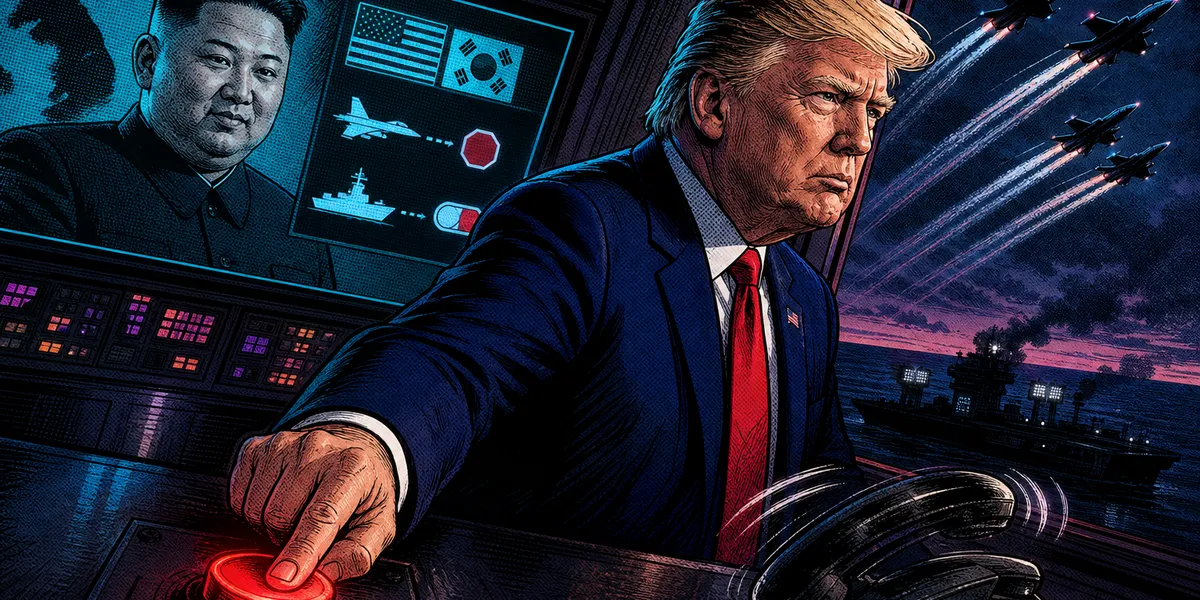
Trump–Kim Nuclear Diplomacy
Updated 12 updatessince 146 outlets
The saga chronicles President Trump's diplomatic efforts with North Korea, highlighted by planned talks with Kim Jong Un amidst military tensions and adjustments in U.S.-South Korea joint exercises.
Timeline
Now
Trump ends joint drills early to woo Kim
De-escalationOn August 21, 2026, South Korea's Joint Chiefs of Staff announced that the Ulchi Freedom Shield military drills with the U.S. would end six days earlier than initially planned due to a request from President Donald Trump.
22 sources · The Guardian, BBC
North Korea fired over 10 short-range ballistic missiles toward the sea in response to President Donald Trump's announcement about potential talks with Kim Jong Un. The missile launches occurred shortly after Trump directed the Pentagon to significantly reduce joint military exercises with South Korea, aiming to…
15 sources · The Guardian, Los Angeles Times
South Korean Foreign Minister Cho Hyun stated that their government was unaware of President Donald Trump's decision to scale back joint military exercises before he announced it on Truth Social.
14 sources · Reuters, NBC News
Trump signals expected meeting with Kim
EscalationPresident Donald Trump announced that he expects to meet North Korean leader Kim Jong Un later this year, marking a significant move in his foreign policy approach towards North Korea.
30 sources · Washington Post, Boston Globe
Trump Cuts Military Drills With South Korea
De-escalationOn August 15, 2026, President Donald Trump announced a directive to substantially reduce U.S. involvement in joint military exercises with South Korea, citing their expense and claiming they send a negative signal to North Korea.
38 sources · Washington Post, ABC News (Australia)
Kim Yo-jong declares nukes nonnegotiable
EscalationKim Yo-jong, sister of North Korean leader Kim Jong-un, declared that North Korea's status as a nuclear power is 'absolutely non-negotiable' ahead of Chinese President Xi Jinping's first visit to the country in seven years.
13 sources · Politico, Latestly
Kim Nuclear Arsenal Plans Amid Talks
EscalationKim Jong Un, at the conclusion of North Korea's Ninth Congress, vowed to expand the nation's nuclear capabilities and asserted conditions for improved U.S. relations, insisting that Washington must abandon its hostile policy.
19 sources · Reuters, BBC
U.N. Security Council's sanctions committee approved exemptions for 17 humanitarian aid projects to North Korea, allowing for the resumption of previously suspended aid.
10 sources · New York Times, NPR
President Donald Trump wrapped up his Asia trip without achieving a face-to-face meeting with North Korean leader Kim Jong Un, which he had previously expressed hope for. Trump cited 'timing' issues for the missed opportunity, while experts suggest changing geopolitical dynamics influenced North Korea's reluctance to…
19 sources · Reuters, AP
President Donald Trump stated he 'would love' to meet North Korean leader Kim Jong Un during his ongoing Asia tour, indicating his willingness to extend his trip for the meeting.
21 sources · Reuters, BBC
South Korean Foreign Minister Cho Hyun stated that President Lee Jae Myung has requested President Donald Trump take on a peacemaker role in addressing tensions with North Korea.
10 sources · AP, New York Times
President Donald Trump indicated his intent to meet North Korean leader Kim Jong Un within the year during his first meeting with newly elected South Korean President Lee Jae Myung.
14 sources · Reuters, BBC
- Origin Aug 25, 2025
The story so far
As of August 21, 2026
Ulchi Freedom Shield, the main US and South Korea summer exercise, is ending six days early at US request. Planned to run 11 days through August 27, it will now conclude August 21 after five days, with some live field events canceled or converted to simulations and others pared back. The shift followed President Donald Trump’s directive to substantially scale down the drills, which he called costly and an inappropriate signal to Pyongyang. He also linked the move to South Korea declining to assist the United States in the war with Iran.
The change rattled alliance management in Seoul. South Korea’s foreign minister told lawmakers that neither Seoul nor Washington officials had prior notice of the decision, and Defense Minister Ahn Gyu-back described the order as unilateral. With the exercise shortened midstream, the allies are still deciding which combined field training events proceed and which will be run as simulations.
Pyongyang’s answer has been pressure, not engagement. Hours after Trump said he expects to meet Kim Jong Un later this year, North Korea launched more than 10 short-range ballistic missiles from the Pyongyang area into the East Sea, each flying about 300 kilometers. Kim Yo Jong dismissed the exercise cut as meaningless and denied any current leader-to-leader communication, while noting her brother’s personal rapport with Trump remains excellent.
That response fits the position North Korea has set this year. Kim Jong Un vowed to expand the nuclear force, and Kim Yo Jong has called the country’s nuclear status absolutely non-negotiable while insisting the United States abandon what Pyongyang labels a hostile policy. Those facts explain the missile volley during downsized drills and the refusal to treat the cutback as goodwill. What is at stake now is whether Washington can test a renewed channel to Kim without eroding readiness and trust with a partner that hosts about 28,500 US troops, and whether Pyongyang will engage without the fundamental concessions it has already demanded.
Each entry is synthesized by AI from the reports linked on it, and labeled with the kind of change it represents. How Frameshift works · What the labels mean · Report an error
In the app
Read this timeline in Frameshift
Four stories are free on the web. The full Vault, with every timeline and brief, is in the app.